Blog


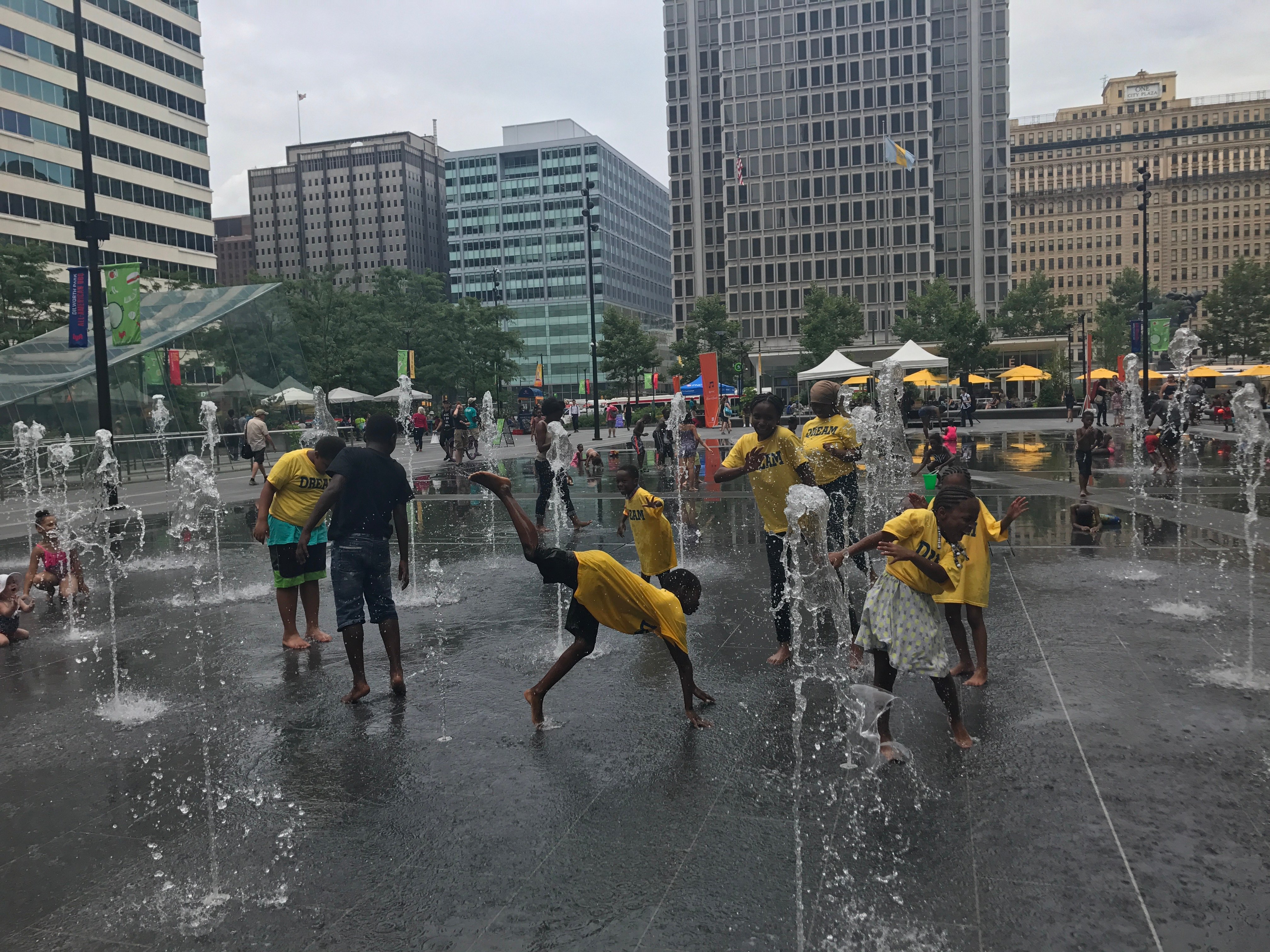
At DREAM, mentoring is about more than a match. It’s about creating the conditions for young people to build the relationships, confidence, and connections that shape a thriving future.
Founded in Vermont’s Upper Valley, with over 45 sites across the northeast and mid-Atlantic, DREAM works to address a growing gap in access to adult mentors and other critical resources for youth living in low-income households. Through its Village Mentoring program, DREAM pairs young people one-to-one with college student mentors while also creating opportunities to belong to a wider mentoring community. This model reflects an important truth: thriving does not happen through isolated relationships alone. It grows within relational ecosystems—webs of connection that help young people experience belonging, expand access to resources, and imagine new possibilities.
What this partnership demonstrates is that strong ecosystems also need strong infrastructure.
Search Institute provides the infrastructure that allows local relational ecosystems to thrive. In partnership with DREAM, that meant bringing together developmental science, practical tools, shared frameworks, and rigorous measurement to help a geographically diverse mentoring organization scale with greater clarity, consistency, and intention.
This is what relational infrastructure looks like in practice: a scalable infrastructure allowing sites to leverage one relationship-focused framework while remaining locally relevant.
Moving to a System Designed for Impact
DREAM came to Search Institute with an important question: How can we better understand the impact of our mentoring model—and use that learning to strengthen it over time?
Like many organizations doing deeply relational work, DREAM was balancing both opportunity and complexity. Their mentoring model was rich with promise. College student mentors were helping build bridges across age, experience, and access—connecting young people not only to caring relationships, but also to new environments, resources, and possibilities. DREAM’s leadership recognized the importance of strengthening consistency in how high-value relationship-building practices were implemented across sites. Their group-based village model added another layer, creating space for mentor-mentee pairs to learn and grow alongside one another. Meanwhile, AmeriCorps, a significant funder of the program, includes evaluation as part of its grant requirements, supporting DREAM’s deeper exploration of its impact among mentees across its large and diverse area of service.
DREAM already recognized the power of the Developmental Relationships Framework—five elements, expressed in 20 specific actions, that are proven to catalyze young people’s lives: express care, challenge growth, provide support, expand possibilities, and share power—and believed deeply in its value. Because most DREAM mentors are college students, the framework’s simplicity and intuitive design make it accessible and practical to use in building strong developmental relationships with young people. But across the rural and urban communities DREAM serves, that framework was being used in different ways. Some locations were already fluent in the framework; others were just beginning. DREAM wanted to make the framework more accessible, more structured, and more consistent across the organization so staff and mentors could share a common language and approach.
That is where relational infrastructure becomes essential.
Rather than treating consistency as a compliance exercise, this partnership focused on building a shared operating system for mentoring—one rooted in developmental science and flexible enough to support local context. The goal was not to flatten differences across communities. It was to create a shared language, a stronger structure, and a more intentional foundation so that each site could adapt from a standardized, research-informed base.
From Evaluation to Architecture
At the same time, DREAM needed a more rigorous evaluation to support AmeriCorps funding and help demonstrate the value of their work. They also wanted to better understand what was driving impact—and where there was room to grow.
Our partnership with DREAM began with a longitudinal evaluation process that unfolded over two years, including a full year of survey-based data collection and close collaboration throughout. But the evaluation was never meant to be an endpoint. It functioned as a diagnostic feedback loop—one that could help DREAM understand not only whether the model was making a difference, but also what mechanisms inside the model were driving growth and where relational perception gaps—the difference between how adults perceive the support they provide and how young people actually experience those relationships—remained. A relational perception gap is a barrier to a shared understanding, and closing the gap enables more effective developmental relationships with young people. This marked an important shift: moving from guessing what works to an intentional system where data identifies exactly where the relational gaps are.
The work resulted in two reports. One was a formal impact evaluation of DREAM’s program. The other examined how mentoring relationships within DREAM’s Village Mentoring model can strengthen youth social capital. Together, the findings affirmed something Search Institute has long known: developmental relationships matter deeply. Young people’s sense of belonging, access to resources, and experiences of support from mentors, staff, and peers emerged as critical mechanisms for positive development.
Just as important, the findings surfaced where improvement was possible.
Some outcomes were encouraging. Others remained steady. Instead of treating those results as a limitation, DREAM used them as a roadmap. The data created clarity about where more intentional support, structure, and alignment could deepen impact across the organization.
That is where the partnership evolved from evaluation into architecture.
Building on the findings, Search Institute and DREAM moved into an improvement science phase focused on strengthening implementation across sites. This included using a research-based conversation card deck and other practical tools to make the Developmental Relationships Framework more actionable in daily practice. In one sense, these were analog tools: surveys, facilitated reflection, physical cards. But together they were doing something much larger. They were helping build a shared language that sets the stage for real-time, contextual support for every DREAM mentor in the future.
“We’ve loved our partnership with Search Institute,” says Mike Foote, Founder and Chief Empowerment Officer of DREAM. “Their talented and mission-focused team of researchers has helped us better understand our impact and turn that learning into stronger practice across our mentoring communities.”
Building Relational Infrastructure That Scales
This partnership helped DREAM move from asking, “Did it work?” to a more powerful question: “How do we build a system that helps it work more consistently, more intentionally, and more equitably across every site?”
That distinction matters.
The evaluation gave DREAM rigorous evidence to share with AmeriCorps and other stakeholders. But beyond accountability, it helped reveal the architecture of impact: the conditions that matter most in mentoring, the relational experiences that support growth, and the opportunities to strengthen practice across a diverse network of sites.
What emerged is a compelling proof of concept: mentoring does not have to depend on happy accidents or uneven implementation. When research is turned into clear tools, shared approaches, and data that helps organizations improve—the relational infrastructure—they can more intentionally create places where young people feel they belong, build strong connections, and grow.
Search Institute was not the mentoring provider in this story. DREAM’s mentors, staff, and communities are the relational ecosystem. Search Institute’s role was to provide the infrastructure: the science, tools, measurement approach, and improvement process that help that ecosystem function with greater coherence and strength. That distinction is central to Search Institute’s vision for enduring change. Lasting impact happens when organizations are supported not only in caring deeply, but also in building the systems, language, and feedback loops that make care intentional, measurable, and sustainable.
"The most rewarding thing about my service in DREAM is seeing how our mentees grow and flourish,” says DREAM youth mentor and recent Bennington College graduate, Alexander Bregy. “It makes me very happy to see a mentee come out of their shell. When this happens, I know that we have created a space for them to express themself freely, which is something that all kids deserve."
When mentoring relationships are grounded in developmental relationships, young people are more likely to experience the kind of connection and support that helps them grow in confidence, broaden their world, and strengthen the web of relationships around them. DREAM’s model, and this partnership, point toward a future in which mentoring is not only caring, but also intentional, equitable, and designed to expand possibilities.
What’s Next
Today, Search Institute’s continued partnership with DREAM is centered on improvement.
Together, we are helping DREAM deepen its use of the Developmental Relationships Framework, develop relationship-building tools, and strengthen consistency in how sites across the DREAM network approach relationship-building. By building a shared language for mentors and staff and supporting more consistent practice across sites, this work is intended to create the conditions for greater long-term impact.
This next chapter reflects something Search Institute believes deeply: young people thrive in relational ecosystems shaped by connection, belonging, and purpose. And those ecosystems become stronger when they are supported by infrastructure that is research-informed, practical, and built for continuous learning.
The DREAM partnership shows that relational work can be both deeply human and intentionally designed. It shows that data does not replace relationships; it helps strengthen them. And it shows that when organizations are equipped with an evidence-based foundation, tools, and improvement systems, they can create more equitable, relationship-rich environments for young people across communities.
Mentorship is not a series of happy accidents. By building a relational infrastructure—grounded in developmental science and driven by rigorous data—we are helping ensure that each and every young person is connected to a system designed to nurture and support thriving.